
This oven baked salmon fillet is juicy, flaky, and incredibly easy to make. If you’ve ever wondered how long to bake salmon at 400°F or what temperature salmon should be cooked to, this simple method will give you perfect results every time.
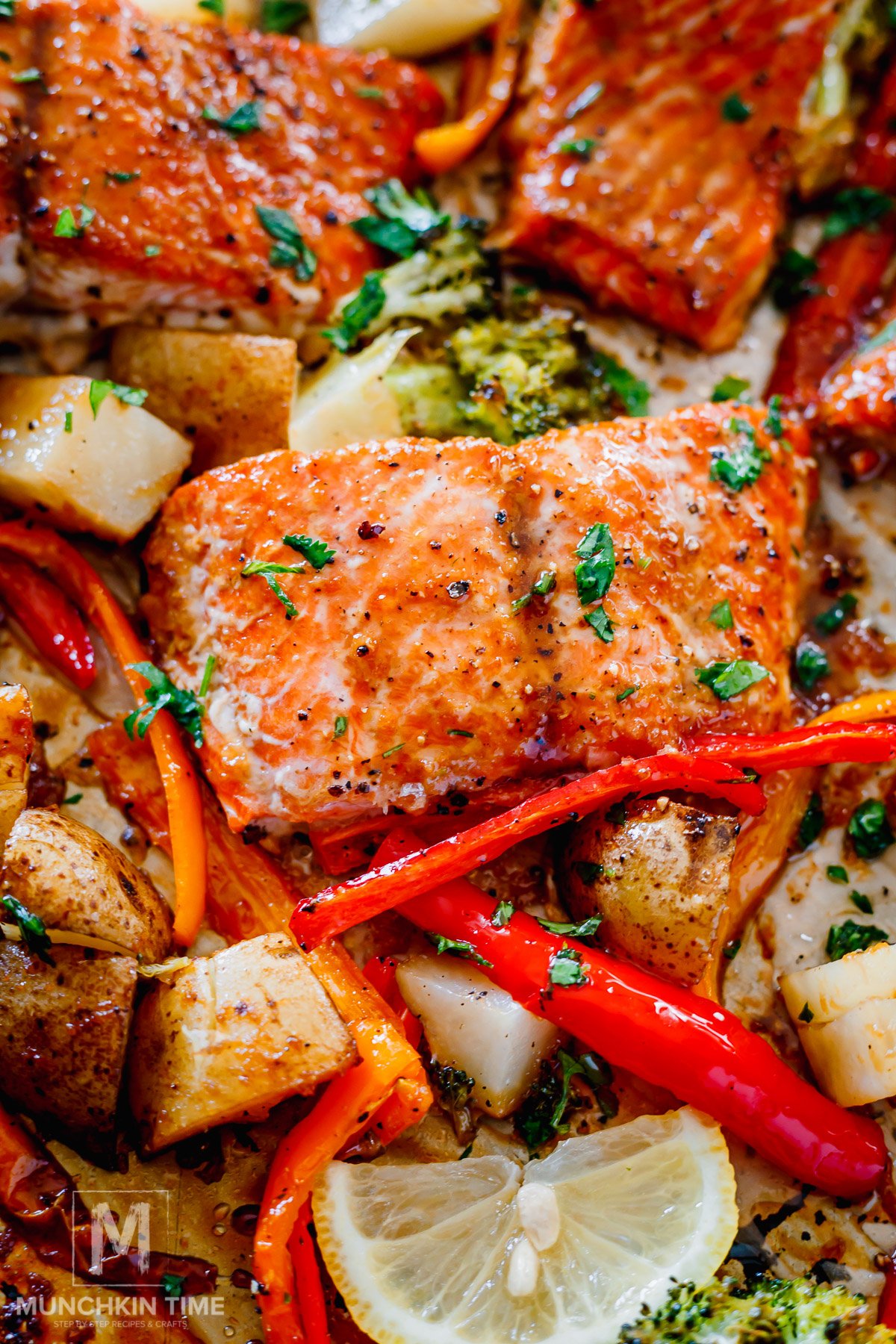
This sheet pan honey garlic salmon is a one pan dinner that takes almost no effort, but feels a little fancy! I've been leaning more toward dairy-free meals lately, since my daughter has a dairy allergy, and recipes like this, sheet pan chicken and veggies, and baked salmon with lemon, make it easy without feeling restrictive.
There is so much flavor from the honey garlic glaze and colorful, roasted veggies and it's a family weeknight dinner salmon recipe that everyone enjoys! Perfect for meal prep and quick weeknight meals, this recipe proves that simple ingredients in healthy sheet pan meals can still deliver the flavor!
If you love simple sheet pan dinners, don’t miss our full list of easy family dinner recipes packed with quick and healthy ideas.
Jump to:
- Why I Love This Recipe
- How Long to Bake Salmon at 400°F
- Ingredients for Salmon and Veggies Sheet Pan
- How to Make Sheet Pat Honey Garlic Salmon
- 350°F vs 400°F – Which Is Better for Baking Salmon?
- Pro Tips for Baked Honey Garlic Salmon
- What Temperature Should Salmon Be Cooked To?
- Recipe FAQs
- More Salmon Dinner Ideas
- 📖 Recipe
Why I Love This Recipe
- A one pan meal. Easy prep, minimal cleanup, and no side dishes for busy weeknights.
- Naturally dairy free. Great for food allergies and doesn’t miss a beat!
- Flavor balance. You’ll love the sweet and savory glaze.
- Healthy and customizable. Use whatever veggies you have on hand.
For an air fryer version, make these easy salmon bites next.
How Long to Bake Salmon at 400°F
Salmon fillets bake beautifully at 400°F and are usually done in 12–15 minutes, depending on thickness.
Here’s a quick guide:
- ½ inch thick: 8–10 minutes
- 1 inch thick: 12–15 minutes
- 1½ inches thick: 15–18 minutes
The salmon is done when it flakes easily with a fork and reaches an internal temperature of 125–130°F for medium, or 140°F for fully cooked.
Ingredients for Salmon and Veggies Sheet Pan
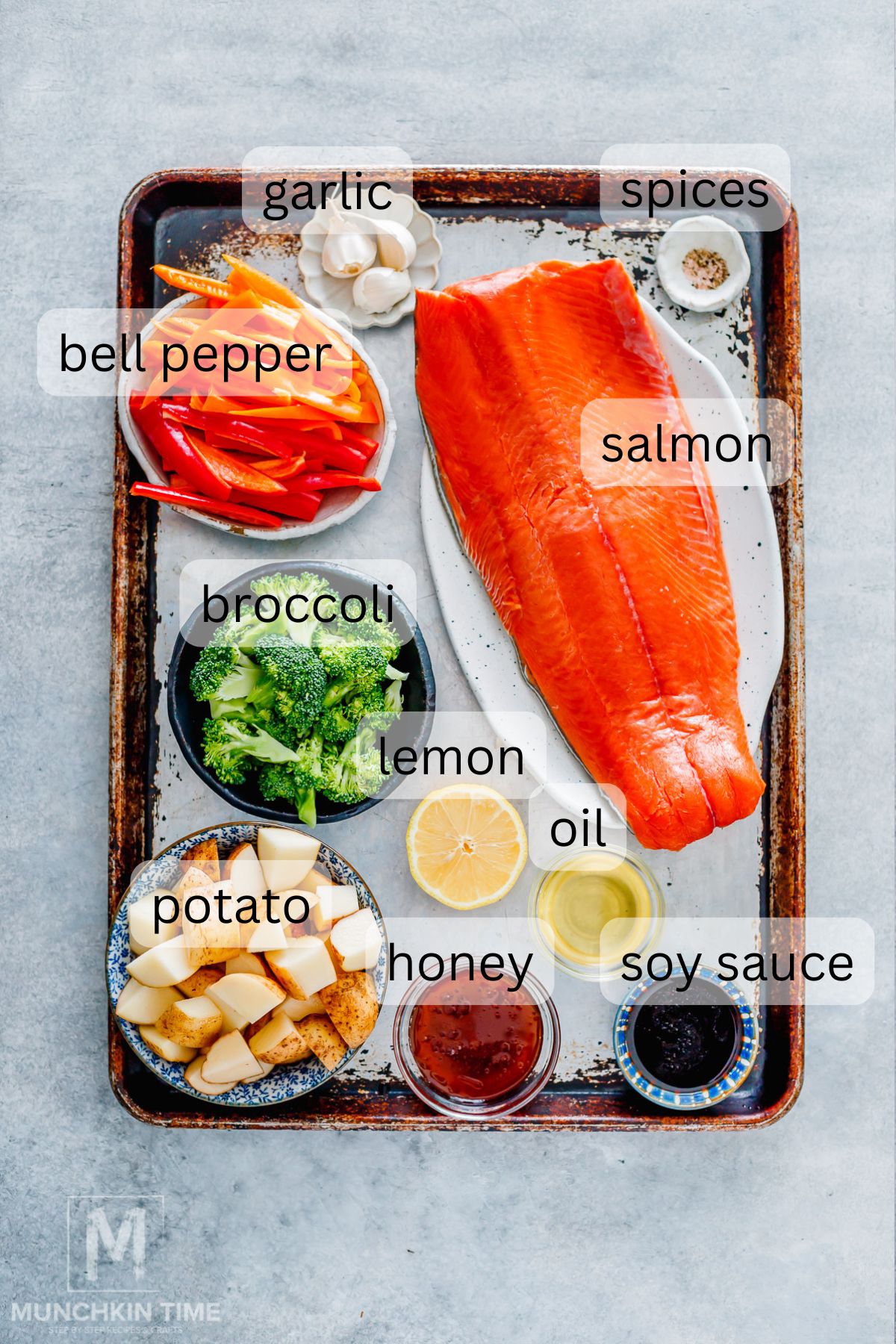
- Salmon fillets: I use 6 oz pieces. You can choose to keep the skin or remove it.
- Broccoli, red and yellow bell peppers: Slice the bell peppers to even thickness for even cooking.
- Russet potato: Scrub and dry the potatoes. Cut them into ½ inch cubes. I like to keep the peel on.
- Olive oil, salt, and pepper: Seasoning for the veggies. The olive oil helps them caramelize.
- Honey, garlic, soy sauce: The base of the glaze for the salmon. Gives both the sweet and the savory, with the depth of umami flavor as well.
- Lemon juice and black pepper: The acid needed to brighten up the glaze.
- For garnish: Lemon slices and fresh parsley.
If you enjoy meal prep-friendly recipes, these protein-packed Breakfast Bowls are perfect for busy mornings or weekend prep.
How to Make Sheet Pat Honey Garlic Salmon
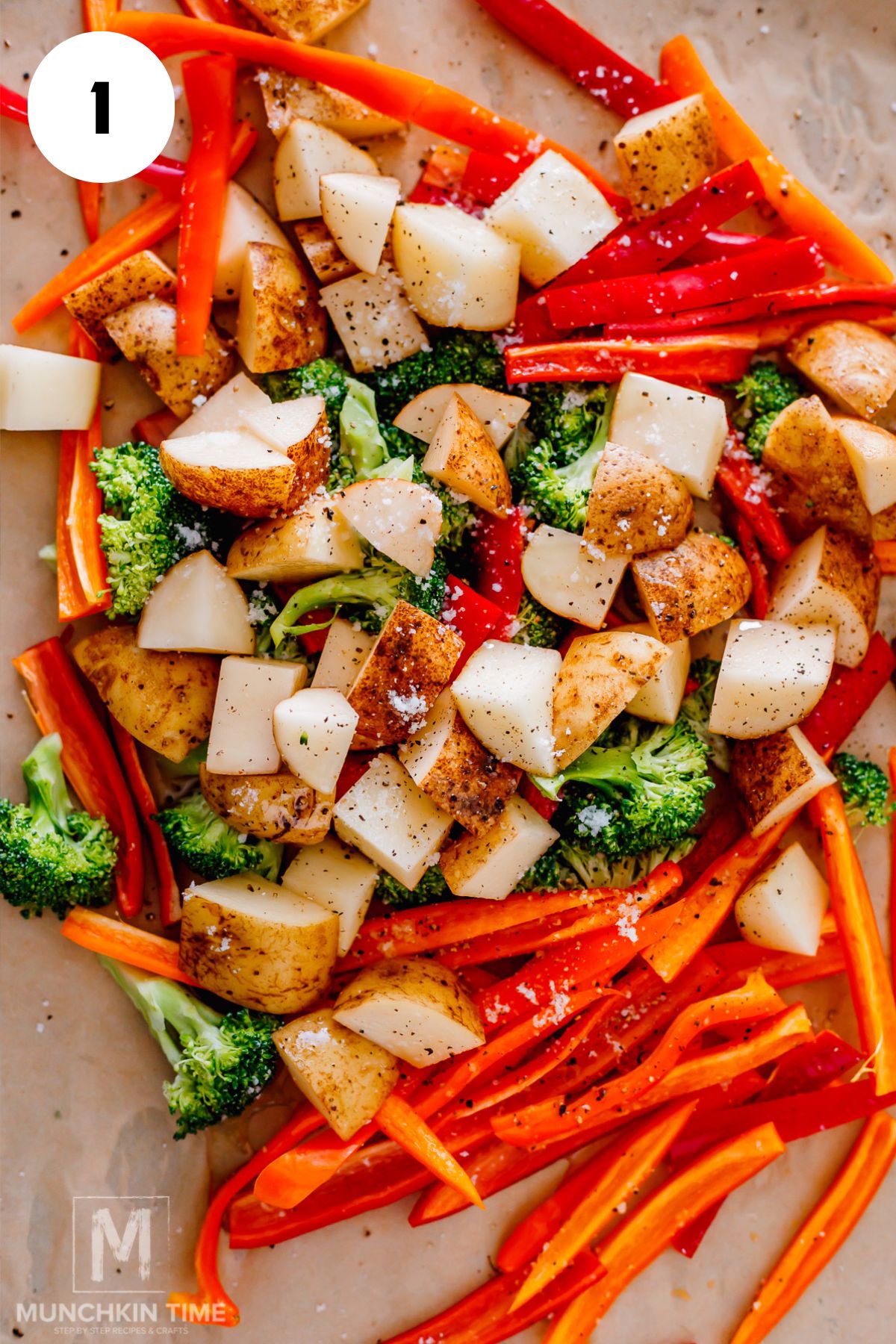
Step 1: On a baking sheet lined with parchment paper, toss the broccoli, bell peppers and potatoes in oil, salt, and pepper. Spread evenly across the sheet pan.
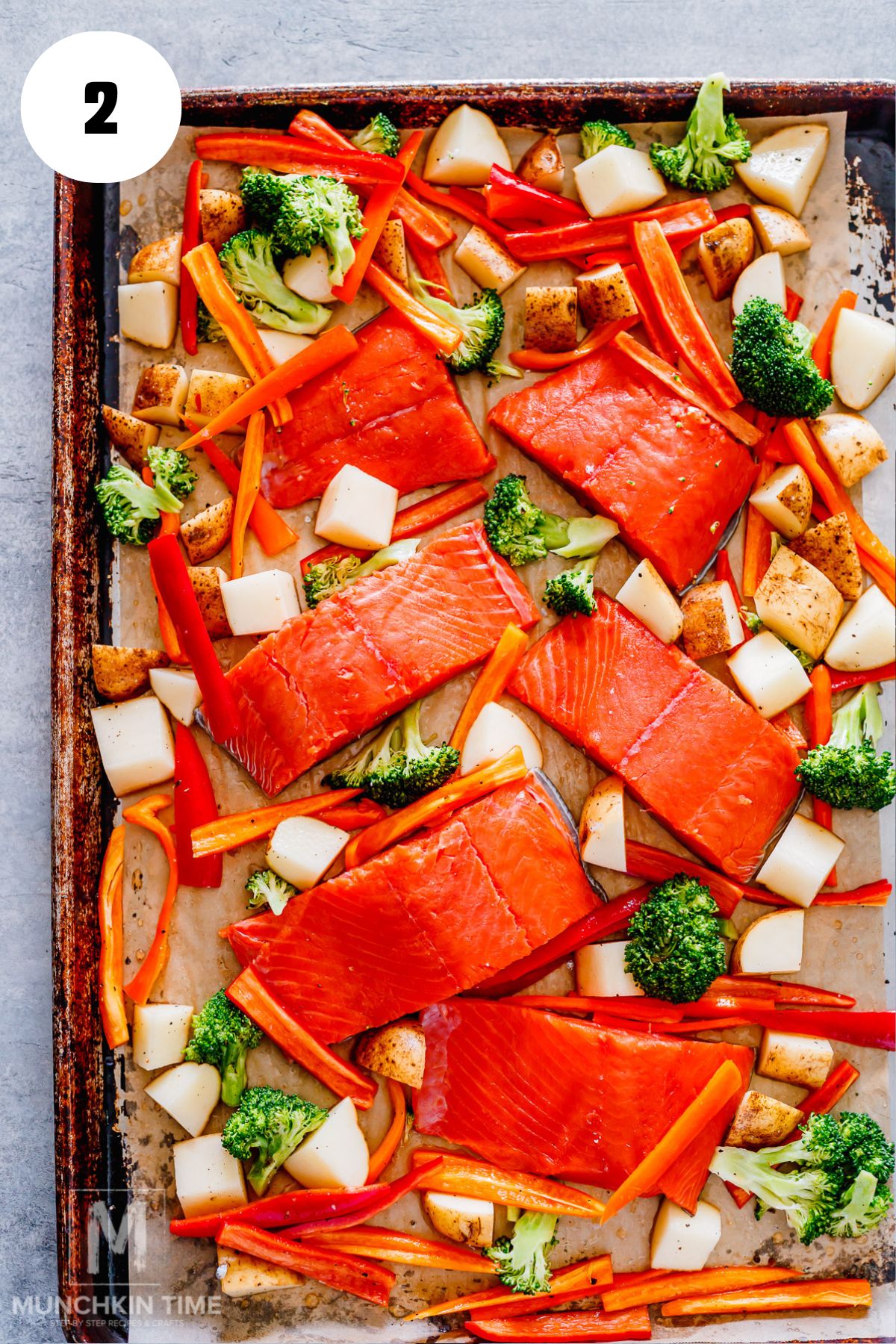
Step 2: Add the salmon fillets to the sheet pan. Nestle them between the veggies, leaving enough room between each fillet.
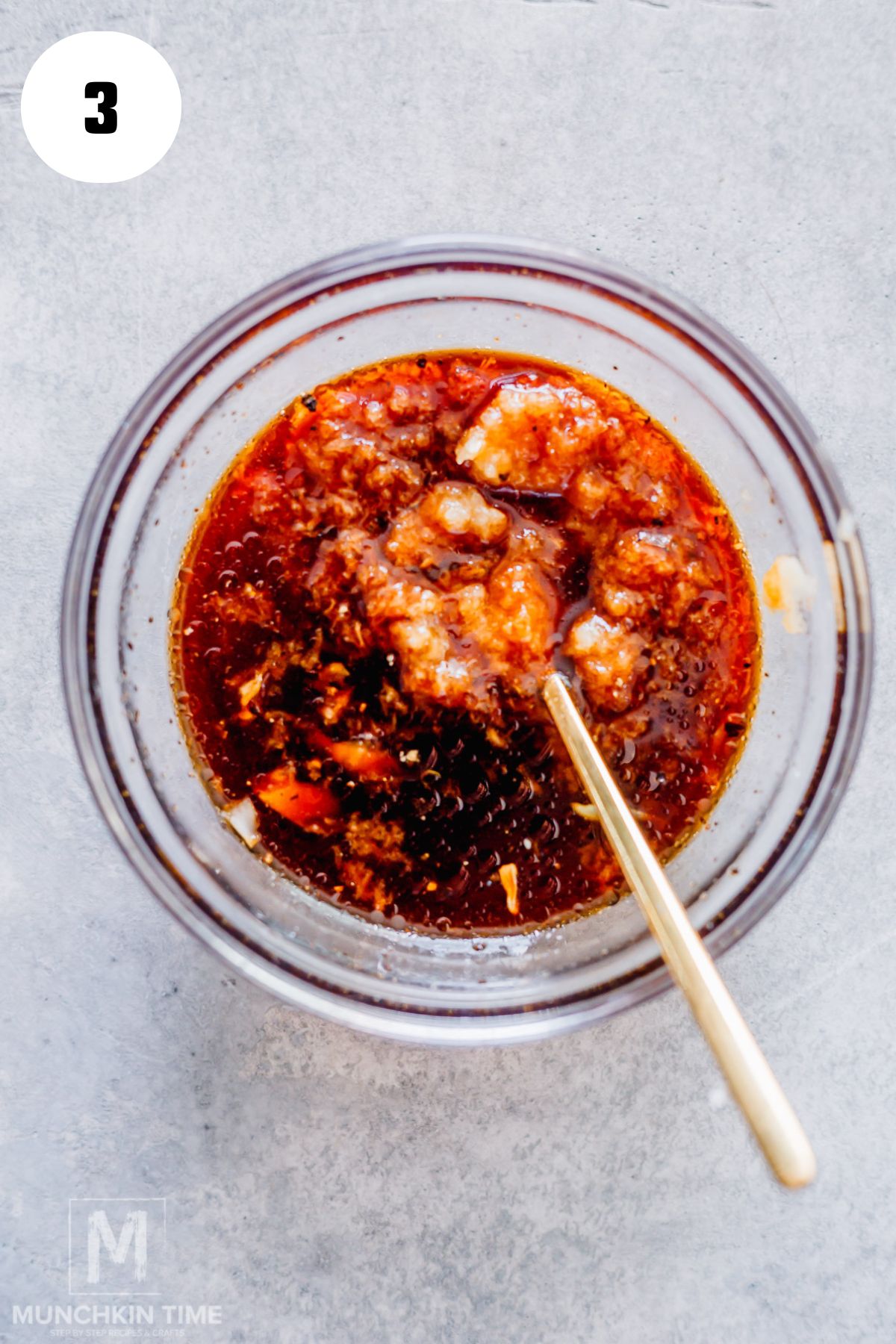
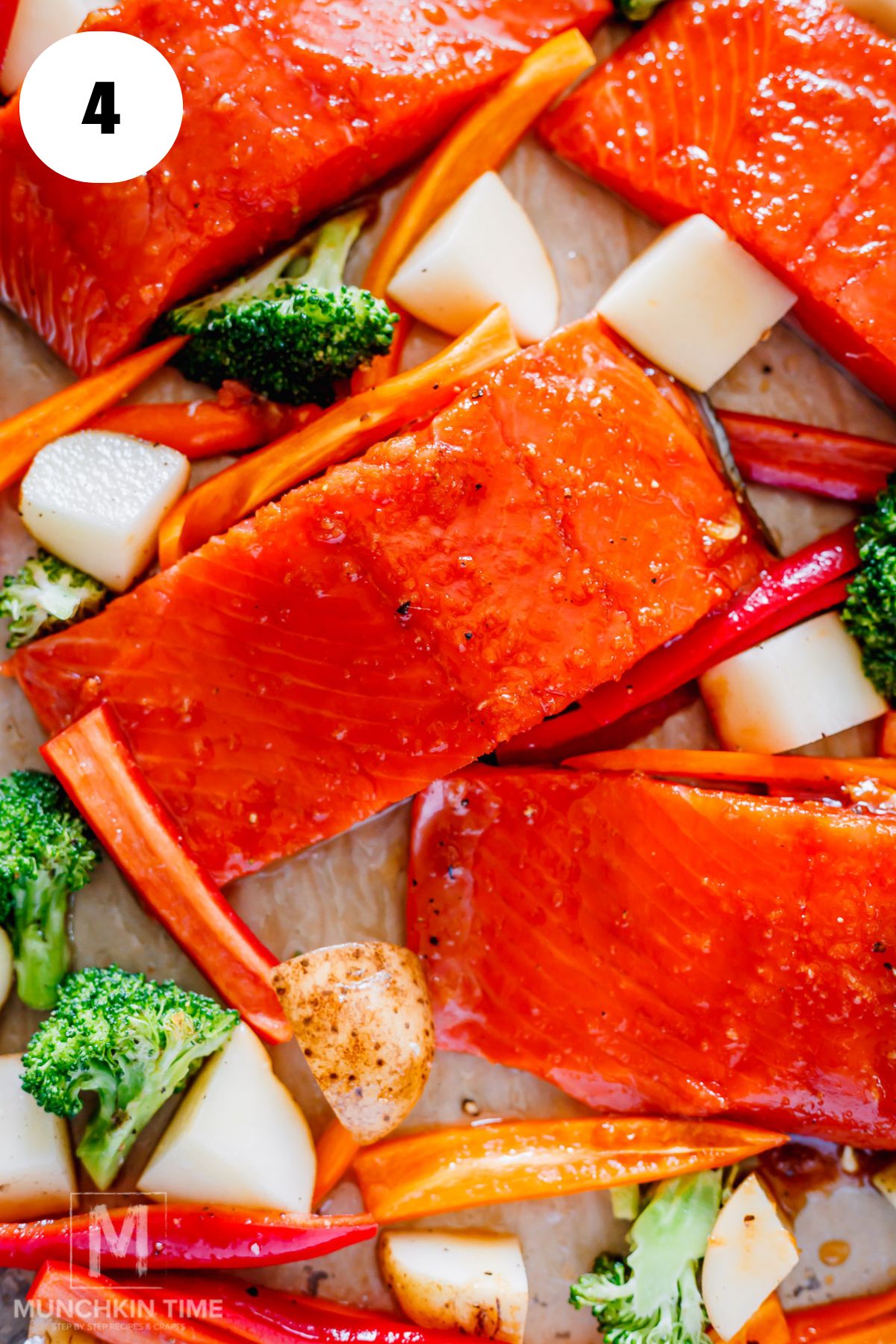
Step 3: In a small bowl, whisk the honey, garlic, soy sauce, lemon juice, and black pepper together. Brush half of this glaze over the salmon and the vegetables.
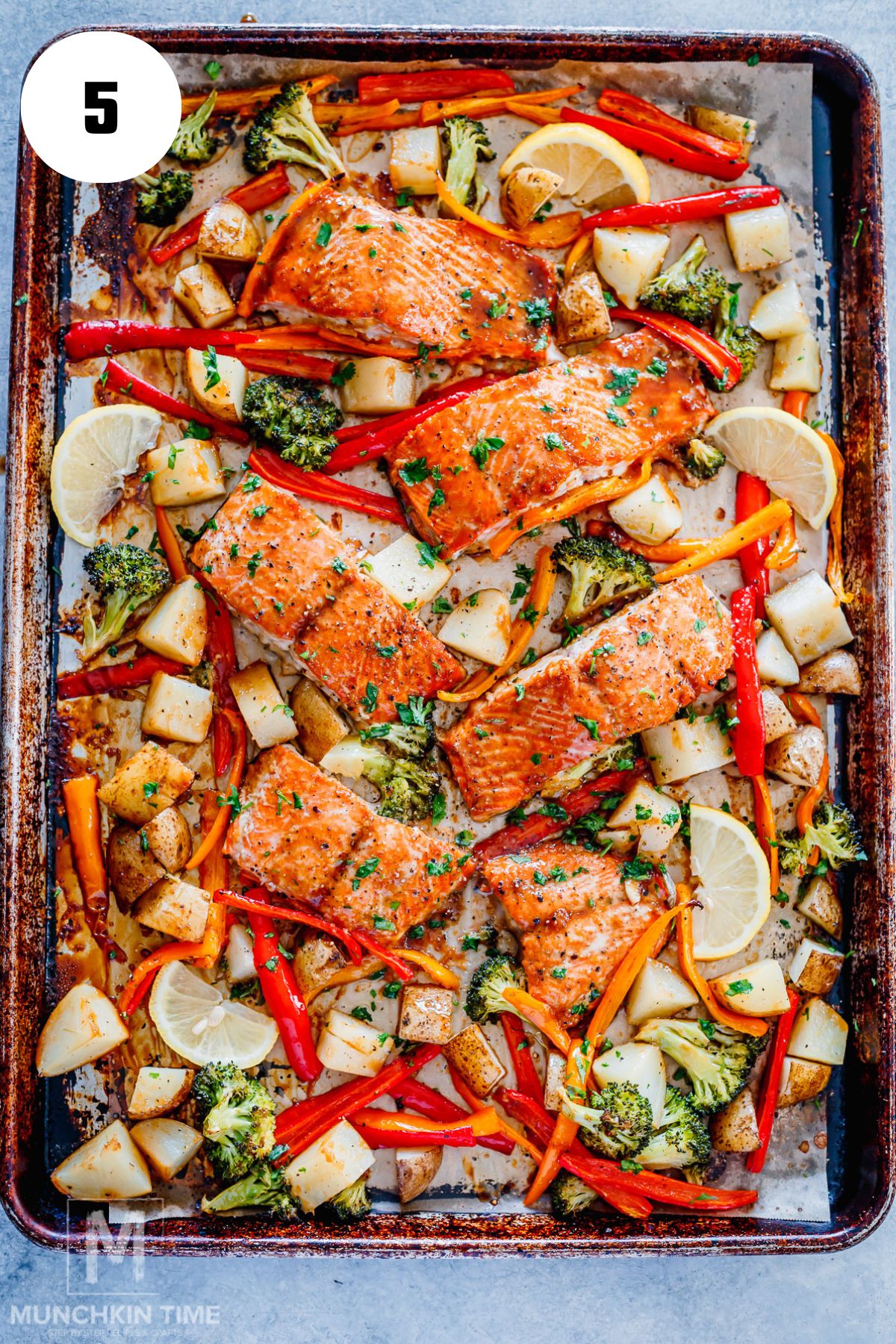
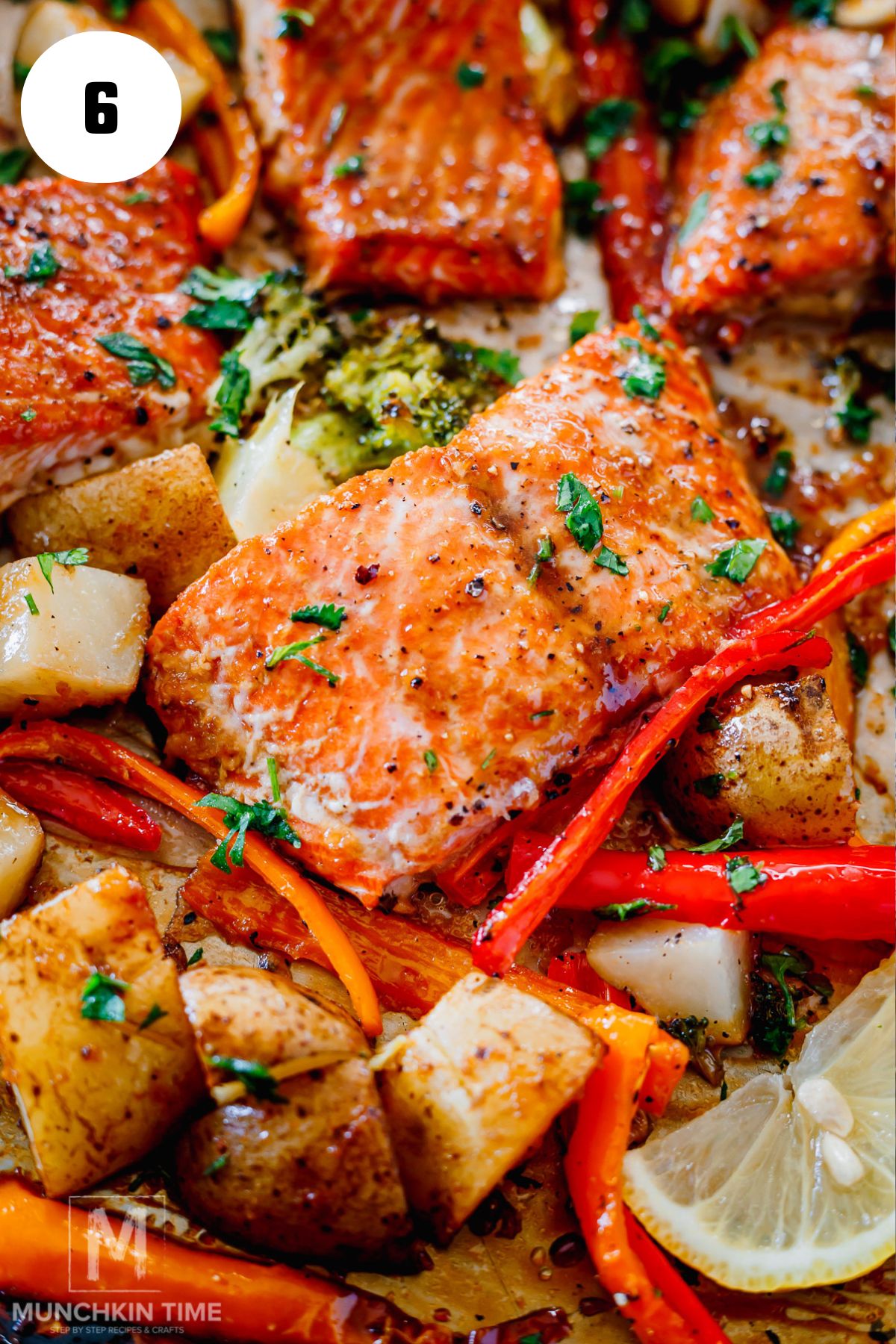
Step 4: Roast in a preheated 400°F oven for 20-25 minutes until the salmon is cooked through and flakes easily and the veggies are tender.
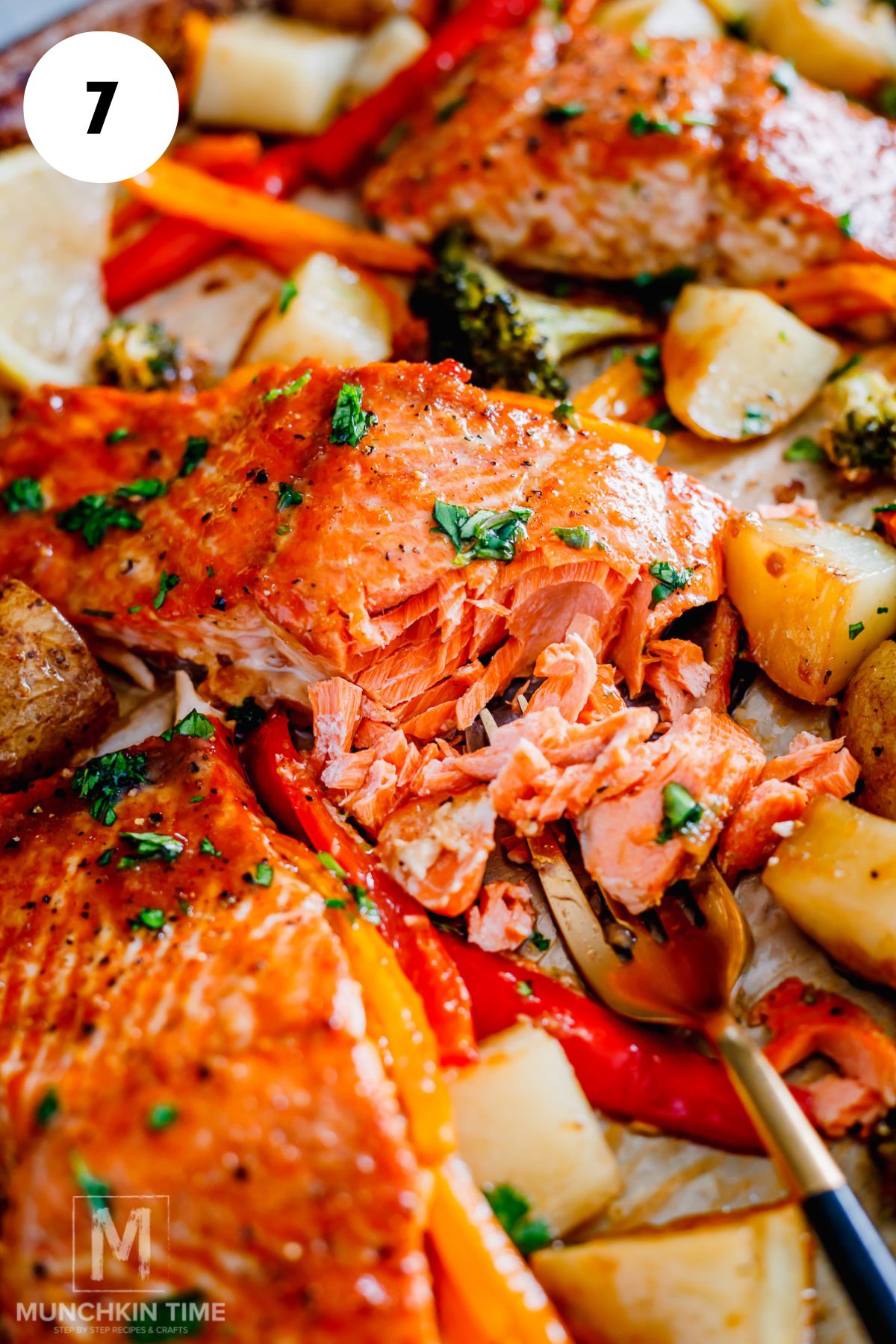
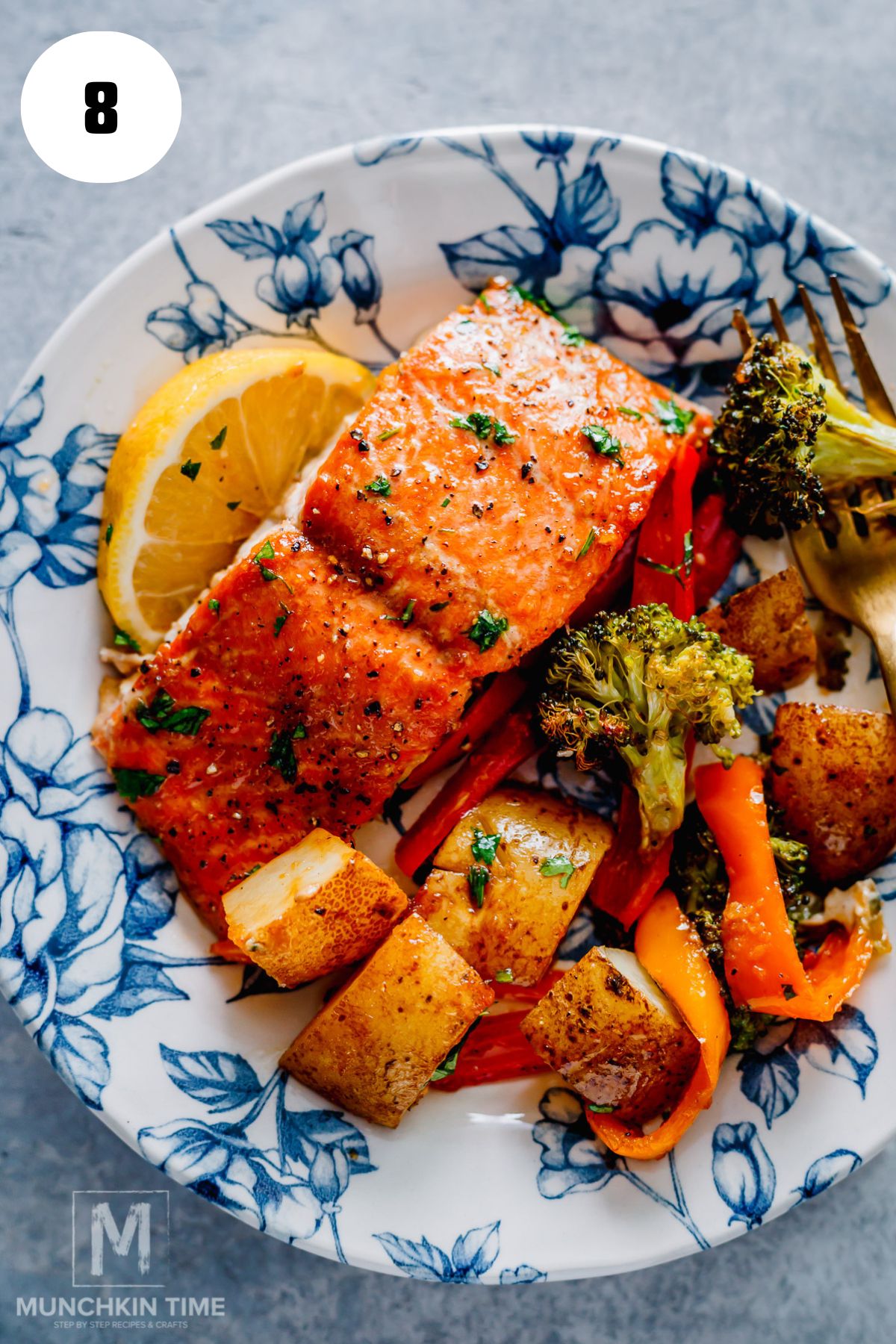
Step 5: Drizzle the remaining glaze over everything, garnish with fresh lemon slices and chopped parsley, and enjoy!
Eat it as is, or serve it over rice and make a dairy-free version of a salmon bowl!
350°F vs 400°F – Which Is Better for Baking Salmon?
Both temperatures work, but they give slightly different results.
- 400°F is ideal for quick cooking with slightly crisp edges and juicy center.
- 350°F cooks the salmon more gently and results in a softer texture.
If you’re short on time, 400°F is usually the best choice for weeknight dinners.
Looking for another healthy seafood dinner? Try my baked trout with asparagus and baby potatoes for an easy weeknight meal.
Pro Tips for Baked Honey Garlic Salmon
- Extra caramelization. Place it under the broiler for 2-3 minutes at the end for extra crispy edges.
- Do not overcrowd the pan. It’s important to keep everything in a single layer, leaving enough room for everything to roast evenly.
- Is the pan too small? Consider using two pans.
- Pat the salmon dry before seasoning.
- Let it rest at room temperature for 10–15 minutes before baking.
- Don’t overcook. Salmon continues cooking after you remove it from the oven.
- Use a meat thermometer for consistent results.
- Cut veggies evenly. Ensuring everything is similar size means you won’t end up with some overcooked and some underdone.
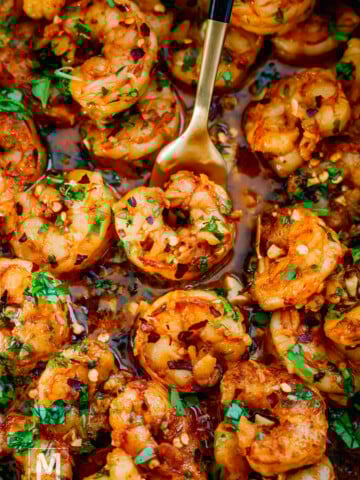
Love bold flavors? Don’t miss our Air Fryer Bang Bang Shrimp for another quick and flavorful dinner option.
What Temperature Should Salmon Be Cooked To?
According to the USDA, salmon should reach 145°F for safe consumption.
However, many home cooks prefer removing it from the oven at 125–130°F for a more tender, juicy texture. The salmon will continue cooking slightly after it’s removed from the oven.
Recipe FAQs
It will flake easily, and will have just turned opaque. Anything more than that and you risk overcooking and drying it out.
You can. Make sure to thaw completely first and then pat them dry. You don’t want to add any excess moisture to the pan.
Absolutely! Clear out your fridge. Try it with cauliflower, sweet potatoes, mushrooms, onions, carrots, or zucchini instead.
Sprinkle some red pepper flakes into the glaze or use a bit of sweet chili sauce. If you’re interested in making a breaded version, you could copy my roasted salmon with broccoli and potatoes recipe. To make it dairy free, omit the butter!
Certainly. The only thing that would need changing is the soy sauce. Use gluten-free tamari or coconut aminos instead!
No, salmon does not need to be covered. Baking uncovered helps it develop better texture and slight caramelization on top. However, you can loosely tent with foil if you want extra moisture.
Baking salmon at 400°F gives a better texture and slightly crisp edges, while 350°F results in softer, more gently cooked fish. For most fillets, 400°F is ideal for a quick and flavorful result.
More Salmon Dinner Ideas
- Salmon Chowder Soup
- Almond Crusted Salmon Kale Salad
- Oven Baked Salmon with Couscous
- Salmon Tempura Sushi Taco
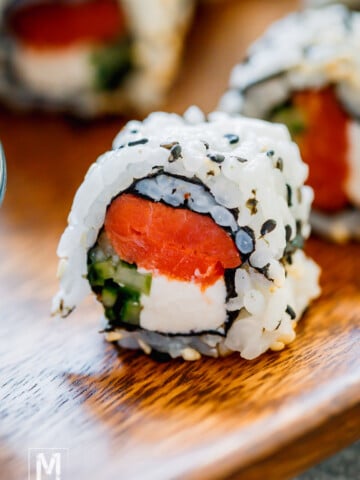
- Salmon Avocado Rolls
- Cucumber Appetizer Bites with Salmon
Did you try this recipe? Please leave us a ⭐ review below!
Thank YOU for YOUR Comment, Share & Recipe Review!
When YOU make this baked honey garlic salmon sheet pan dinner recipe tag us @munchkintimeblog on Instagram, and follow along on Pinterest, Facebook, Tik Tok and YouTube! Thank you for visiting!!!
📖 Recipe
The Best Honey Garlic Salmon Sheet Pan Dinner (Ready in 30 Minutes!)
Equipment
- 1 baking sheet large
Ingredients
Salmon & Veggies
- 4 salmon fillets 6 oz each, skin-on
- 2 cups broccoli cut into bite size pieces
- 1 red bell pepper sliced
- 1 yellow bell pepper sliced
- 1 lb potatoes washed and cut into ½ inch cubes, peel on
- 2 tablespoons avocado oil
- sea salt and pepper to taste
Honey Garlic Glaze
- 3 tablespoons honey
- 3 cloves garlic minced
- 2 tablespoons soy sauce or tamari
- 1 teaspoon lemon juice
- ¼ teaspoon black pepper
Garnish
- lemon slices
- 2 tablespoons parsley finely chopped
Instructions
- Prep Oven & Pan: Preheat oven to 400°F (200°C). Line a baking sheet pan with parchment paper.
- Prepare Veggies: On a baking sheet, toss broccoli, bell peppers, and cubed potatoes with 2 tablespoon avocado oil, salt, and pepper. Spread evenly on the sheet pan.
- Prepare Salmon: Place salmon fillets on the sheet pan, leaving space between each fillet.
- Make Honey Garlic Glaze: In a small bowl, whisk together honey, garlic, soy sauce, lemon juice, and black pepper. Divide the sauce. Brush half of the glaze over salmon fillets and veggies
- Roast: Bake in preheated oven for 20-25 minutes, until salmon is cooked through and vegetables are tender.Optional: Broil for 2-3 minutes for crisp edges.
- Garnish & Serve: Brush remaining glaze over salmon and veggies. Garnish with chopped parsley. Add lemon slices for serving. Enjoy!
Notes
- For best results, choose salmon fillets that are similar in thickness so they cook evenly.
- Pat the salmon dry before seasoning to help it bake properly instead of steaming.
- Bake at 400°F for 12–15 minutes, depending on thickness. Thicker fillets may need a few extra minutes.
- Salmon is done when it flakes easily with a fork and reaches 125–130°F for tender, juicy salmon, or 140–145°F for fully cooked.
- Do not overcook — salmon continues to cook slightly after you remove it from the oven.
- You can bake the salmon uncovered for better texture, or loosely tent with foil if you prefer extra moisture.
- Leftovers can be stored in an airtight container in the refrigerator for up to 3 days.
Nutrition
Happy Cooking!

Love Keil
My family love this recipe!